Grady Shelton's SPFBO Semi-Finalist Pick
INTRODUCTION
First, a note of gratitude. Thank you to all the authors who entered this competition, and especially the initial five I was randomly assigned for my first batch. I wasn’t familiar with any of them before this year, but it’s been a joy getting to learn more about each of their journeys and being able to experience their works. All of them can write well and are impressive in their creativity. It takes a lot of work and dedication to write a novel, and a certain amount of vulnerability to put it out there. These facts aren’t lost on me as I’m writing my own stories, and am in awe of every one of these individuals.
Of my initial five books, only one of them can be selected as a semi-finalist. So now comes the horrid business of filtering out the four other worthy candidates. Below I will provide notes on my experience with each with the hope they’re not only constructive, but also offer a mix of both personal and objective observations to give a holistic sense of my experience.
RUNNER-UP REVIEWS AND NOTES
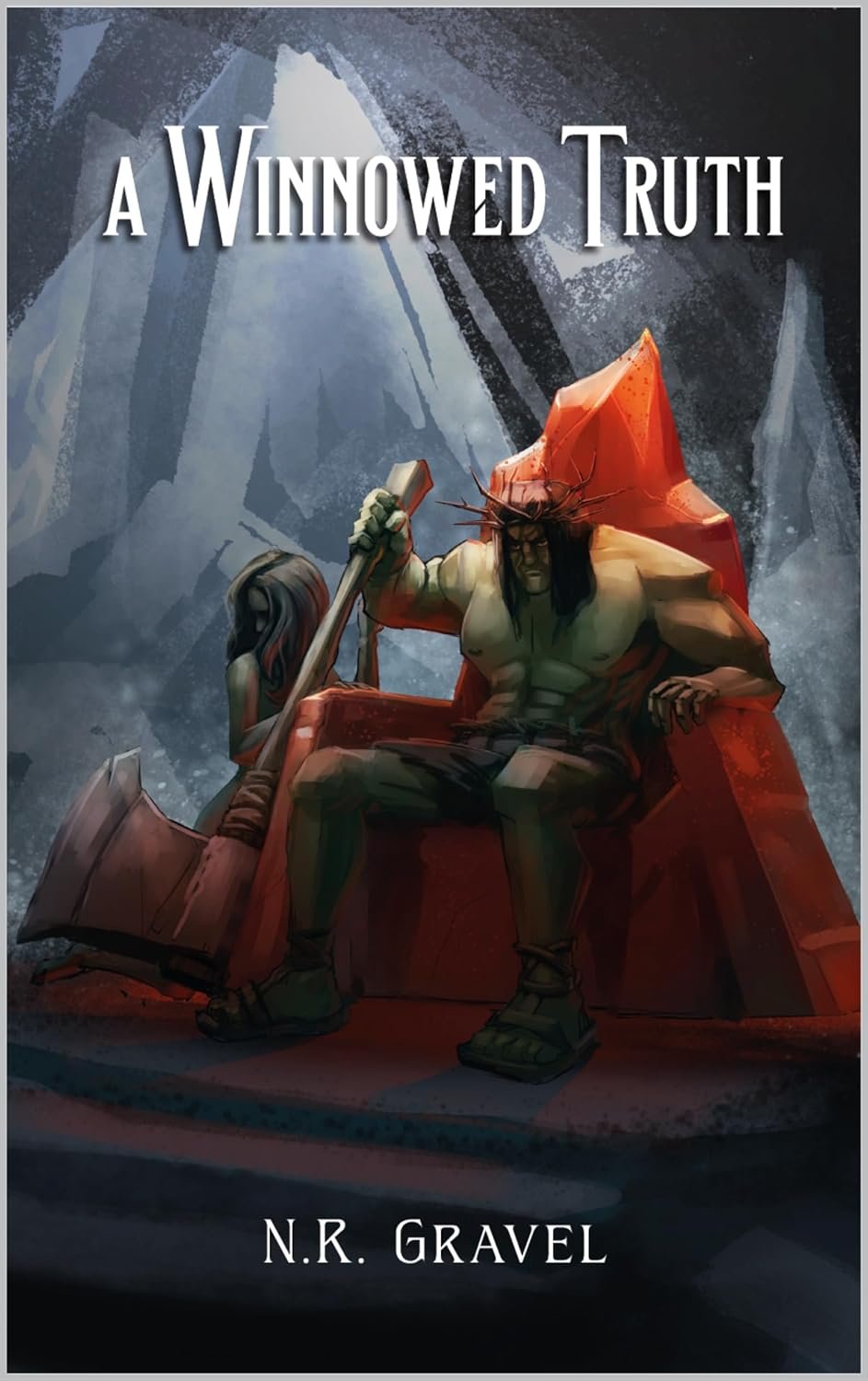
A Winnowed Truth (The Olden Amulet Book 1) by N.R. Gravel
This ambitious series leads with a sublimely inventive plot and world filled with creative creatures, cultures, and behaviors. Author N.R. Gravel throws you into a complex and ambitious tapestry in a fashion that reminds one of Malazan. We primarily follow newly appointed Zephus, wind conjurers still finding their footing before having to embark on a mysterious and perilous quest. There’s a deep and implicit trust in the reader, which doesn’t hold the hand. I love books that do this but there’s usually a cost involved by way of asking some amount of reader investment. To earn the faith of this investment, the bar can be quite high in other areas of the story.
I applaud Gravel for his work, however I did unfortunately find enough criticisms that made me unable to pay the investment needed to earn the potential payoff.
What stood out to me the most was that the characters were not well enough differentiated from one another, and there was little interiority for any of them. Each voice blended together so they sounded similar to each other, even when they come from different cultures and backgrounds. Because the focalizer changes constantly within scenes, this became a big hurdle.
The prose also suffered from many grammatical quirks (and dare I say, errors) that it eventually distracted from the narrative, and broke immersion. I try to be forgiving of these generally but they can add up overtime. Fortunately, they at least are somewhat easier to clean up in the future.
I did also notice that structurally, within given scenes, there was a bit of a narrative pattern of describing each action that happened sequentially, but such that they could feel separate and isolated from each other. Without trying to be too prescriptive, I think adding more connective tissue to show how one event leads naturally to the next could have added more fluidity to these scenes.
These critiques, in addition to the high-bar setup of a dense, ambitious and inventive story, all combined to make it difficult to follow events smoothly. It was unfortunately a difficult read as a result and I did not finish the book completely as I had hoped.
But beyond those criticisms, I’m impressed by the thought and care that went into the world-building here. The atmosphere is mysterious and mythical, and the vibe has a gritty feeling where tension is always there and no one feels safe. It was so unique, and probably the most inventive story and world of any of my first batch books. I’m absolutely interested to see more one day.
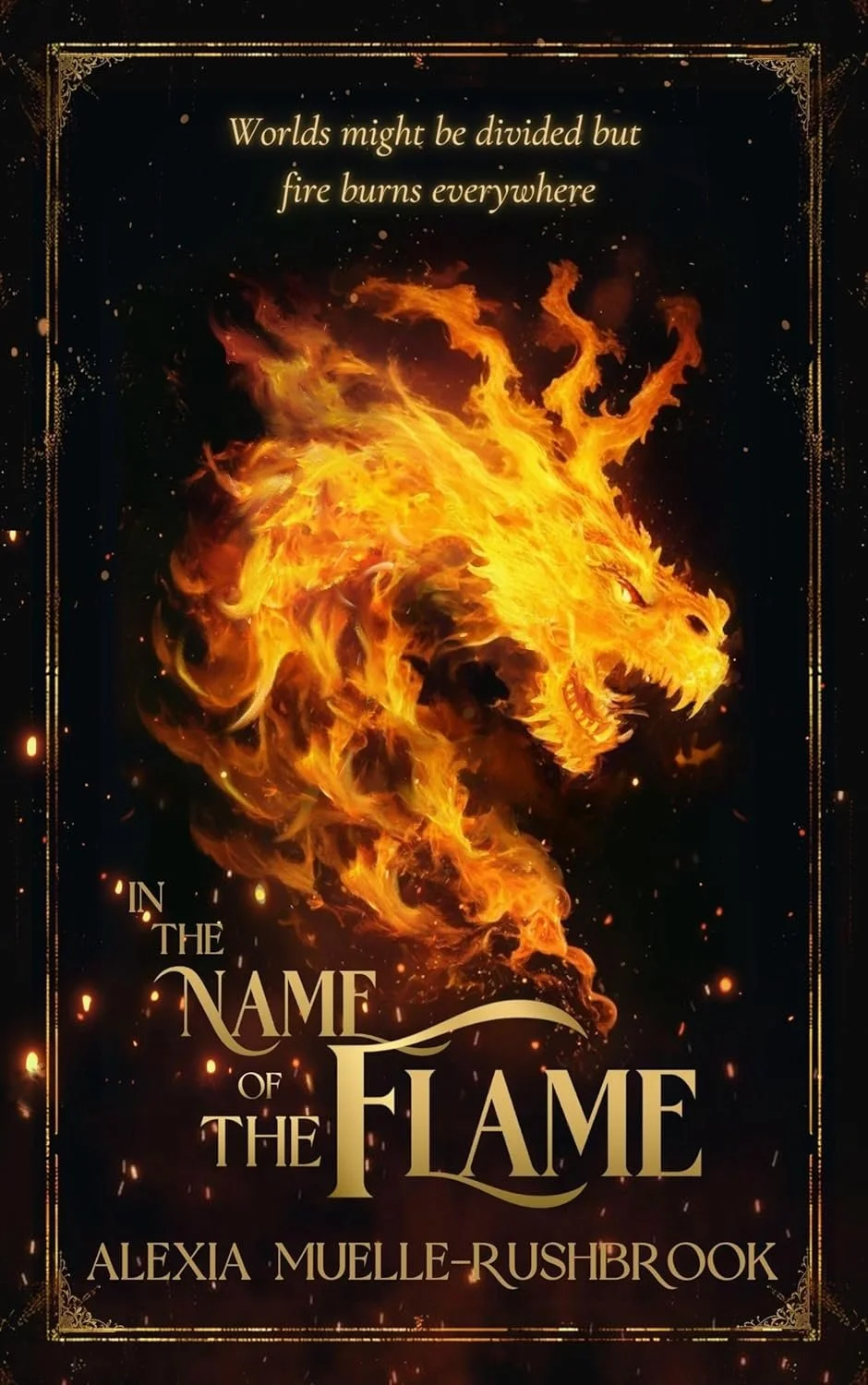
In the Name of the Flame by Alexia Muelle-Rushbrook
A fun, brightly colored and fast-paced Epic Fantasy with dragons and romance. We follow from the perspective of Captain Niall, a prince whose kingdom faces annihilation, and we’re immediately greeted with brisk action and dragons galore. Author Alexia Muelle-Rushbrook (AMR) paced sections together effectively to draw the reader from one scene to the next. She was so good at cultivating the “just one more page, okay one more chapter” urge. A skill to be commended and it made this otherwise beefy novel not feel anywhere near its length.
The magic, world, and dragons all harmonize in a classical way to set up the central conflict quickly and effectively. Each part complements the others, and the antagonists arise as a natural and compelling consequence of this setup.
Unfortunately, there were a couple of structural issues that ended up standing out. In full disclosure this was a DNF at some point after the 50% mark. Chiefly, while the characters are extremely likeable, they lacked for me some of the depth I hope to see, even from our primary perspective, Niall. We see his interiority as a way to give the reader information about the world and the narrative but I wanted to know more about his feelings and personal thoughts, his perspective on himself and his place in the world. It was much more a situation where he would tend to move forward with a narrow field of vision to only assess what was directly in front of him.
His fated romantic interest, the princess Enya, was also likeable but somewhat one-note for what I read. I do think there was enough book left to develop her more, so it’s not a final judgment, but she did enjoy a high word-count for herself, including the beginning of her and Niall’s fated relationship, so I was hoping for a bit more dimensionality by that mark.
Beyond, but somewhat related to, the characterizations, the other pain point I came across was the noticeable reliance on exposition dumps and modern idioms in the prose which hindered my immersion. Within scenes themselves they were usually either all action or all exposition. I would have liked to see a blend of different pacing elements mixed in to result in a smoother experience overall. Within each element, the prose was very smooth and extremely fluid. AMR can absolutely write effectively, so this is no indictment on that.
Overall, I actually think this is a well written book that enjoys having so many intriguing story elements working in its favor. The plotting, pacing, and inventiveness of AMR are great strengths that have deservedly earned her many fans already, and will hopefully earn her more in the future.
“In the Name of the Flame” has high ratings on Goodreads (4.5) and Amazon (4.6) and they’re absolutely justified. It’s a fun and appropriate read for at least the early adult demographic. And if you like propulsive, magical dragon fantasies with romantic subplots, this may scratch that itch extremely well.
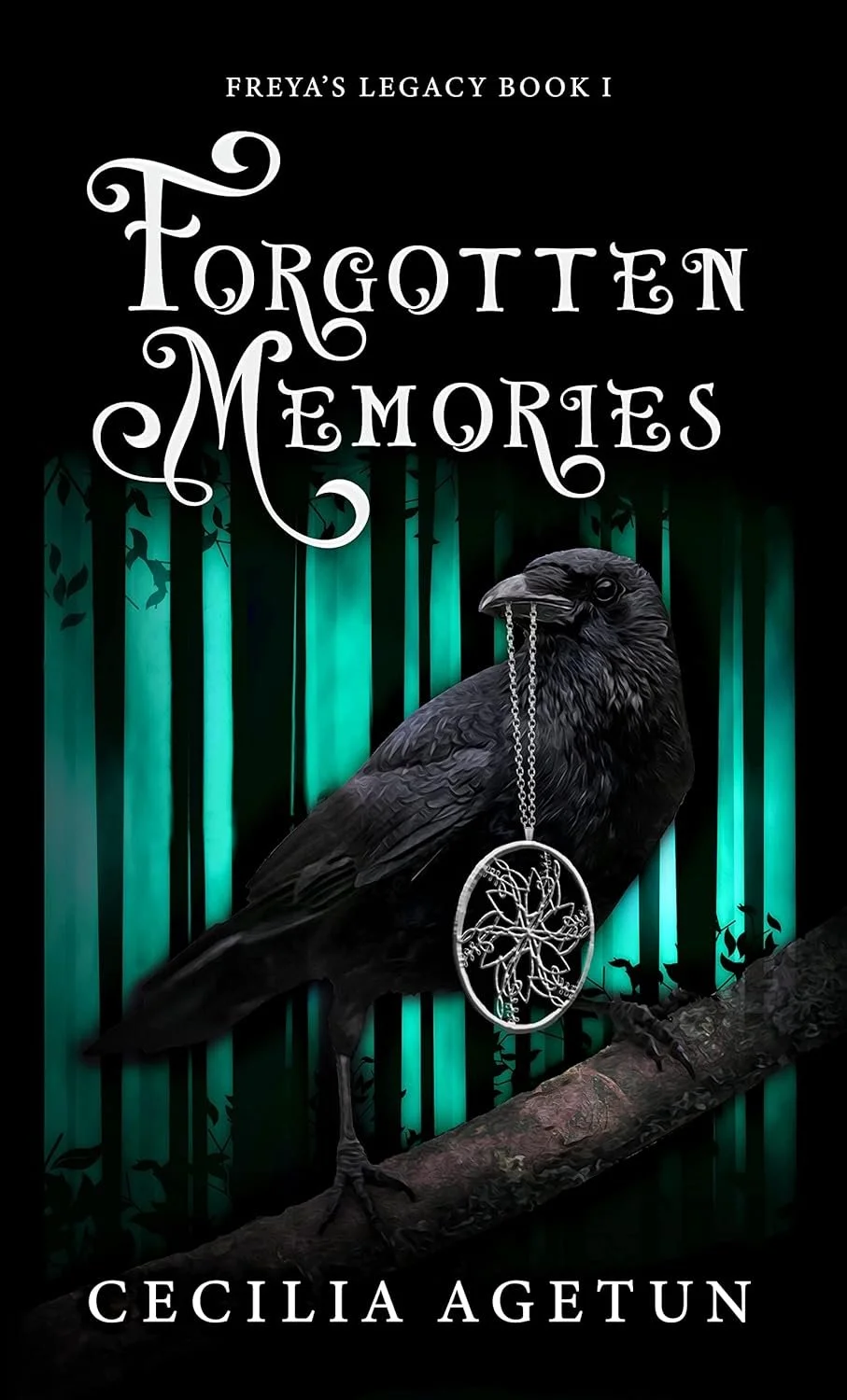
Forgotten Memories (Freya’s Legacy Book 1) by Cecilia Agetun
This YA Contemporary Romantasy nailed the pacing, vibes and tropes of a solid debut from author Cecilia Agetun. We follow the journey of Jax, a Demon who tries to do good (in this world, they can choose to be good?) as he protects his friend’s daughter who’s growing into adulthood and revealing her own magical powers. There’s a mysterious spark between him and her, who thankfully is turning 18 as we speak.
This fated soulmate trope was not my favorite at the start, but to author Agetun’s credit, I think she executed it well and had it fit the story neatly by the end. Without spoiling anything, it also complemented the memory loss trope nicely as well. Technically, there were hundreds of years difference between the romantic partners, but because of the in-universe explanation of slow maturity rates for Demons, I wouldn’t qualify this as a clear cut age-gap trope in addition to the others, and it presented a rather equitable partnership in many ways between the two characters, despite their vastly different experiences and skillsets.
The writing throughout was clear. The pacing was brisk, and the story didn’t drag. There was a central mystery that pulled us through and by the end was well resolved. So altogether there is a lot to like here.
Unfortunately there were some things to dislike as well. Character emotions would often be overly explained, even for this intended age range, and their dialogue could come off somewhat stilted. Beyond the two central figures, most other characters were quite flat and one note. Some had a little development, but because it was a bit flat (for example, the brothers), there was very little to latch onto for intrigue or additional emotional depth.
Structurally, there was also a lack of tension beyond the central mystery. We were promised a vague threat but didn’t see much evidence of why the stakes might actually be so high until late in the story. The antagonist, or even the threat of them, wasn’t clearly defined enough for the majority of the novel to feel like the threat was adequately high to match the magic powers on display. A lot of it felt more akin to paranoia, and even at the end when the antagonist was positively identified, they weren’t themselves well fleshed out. Their motives weren’t clearly understood either, compared to how explicit the rest of the narrative was handled.
The importance of the extended flashback sequence was well understood and fleshed out our protagonist’s motives nicely, but for me it was overly long and distracted from the pacing of the modern day plot too much. It made the climax feel unbalanced, lacking momentum it could have had otherwise. The flashback did help explain the antagonist motives, but I don’t think it succeeded quite as sharply like it could have—it ended up being just a little more muddled than I would have liked. For a story when the bulk of the narrative has set the reader’s expectation of a clear structure, with fairly straight explanations, these incongruencies and loose ends feel especially apparent.
Finally, the demon form of Jax was exciting to see, but it was too little, too late in the story to see it for the first time. It was foreshadowed with vague hints, but having seen it in the narrative with a flashback or some other previous glimpse before may have made that final reveal even more effective. As for the conclusion itself, it was extremely brief, ending the story abruptly, even compared to the relatively fast pace of the rest of the story. Not a big problem at all, but I think just a little more breathing room at the end would have been useful for putting an emotional bow on everything.
All that said, each of the critiques are all fairly small or even addressable with subsequent entries. The prose, while simple, is still clear and concise, which effectively serves the intended audience really well. I liked how the primary twist was handled and how the main characters grew into their relationships and how they related to each other through their different developments. Cozy and earnest, this is the start of a heartwarming series, fun for many YA readers. If you’re a fan of this genre I would recommend giving it a look.
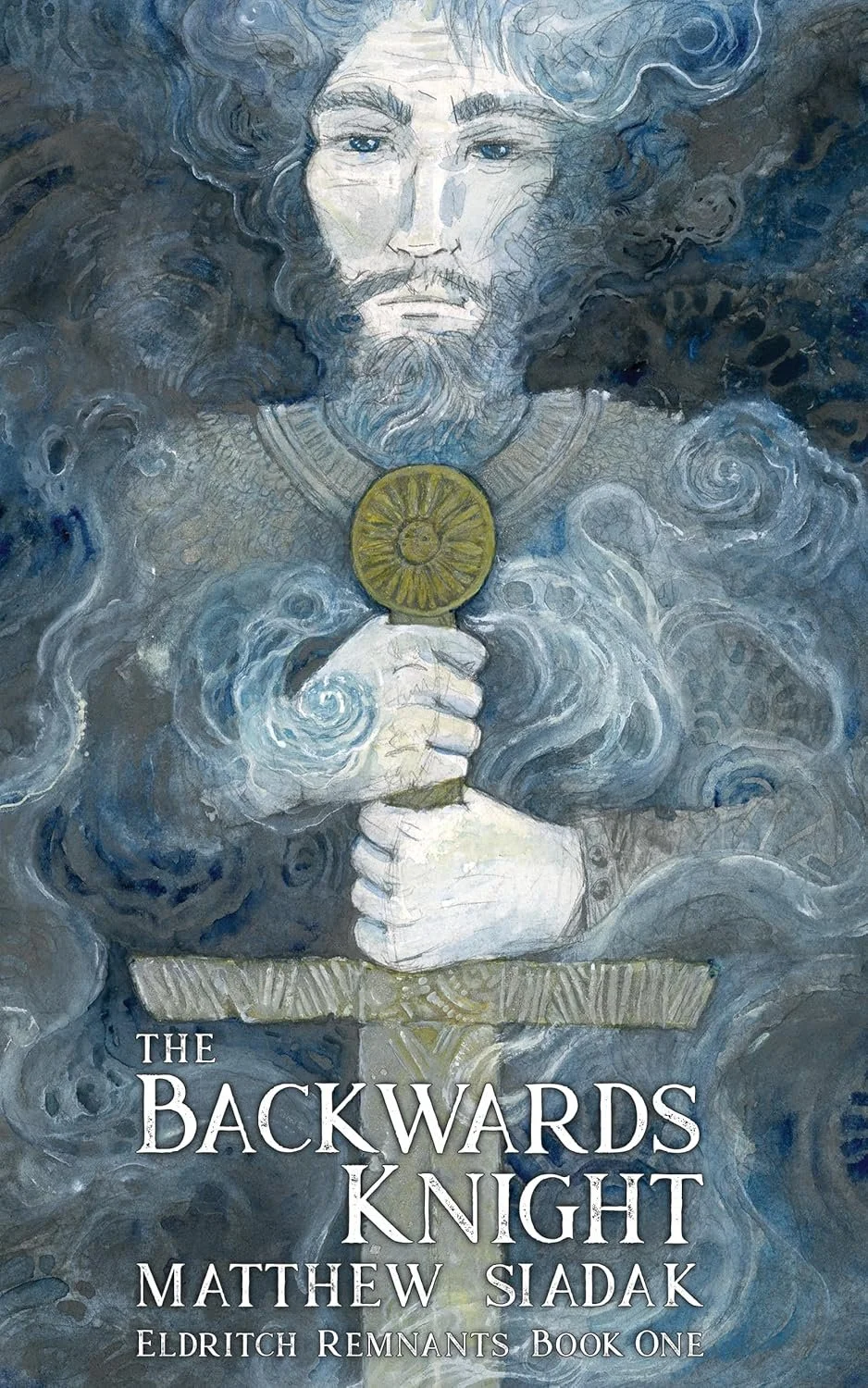
The Backwards Knight (Eldritch Remnants Series) by Matthew Siadak
“The Backwards Knight” was a trip. Author Matthew Siadak thrusts us into a realm where eldritch magic was banished by The Paladin, a ruler who uses magic to keep it suppressed for the rest of the dark and gritty world. The messaging from our power structure that magic is dangerous is reinforced often as blood is violently shed, yet those in power themselves cannot be trusted when they continuously oppress and kill indiscriminately.
The slow progression into madness was hazy and disorienting. Illusions blended seamlessly and kept me off-balance, similar to those in the story. At one point for an afflicted character, one eye saw reality while another saw a magical past. But how this happened, or when, was off the page (or perhaps I just straight up missed it with its subtle inclusion), and I had to piece together what had happened from context. This intentionally muddled posture was odd, but was well earned and fit the narrative perfectly.
The contours of the eldritch horrors are slippery — who is doing what, I'm not sure. That's the nature of cosmic horror to some extent, the more you try to understand, the madder you become. The tone and atmosphere of the world were fantastic. I’m a sucker for dark eldritch fantasy and this had a lot going for it in that regard.
As for our characters, Orn and Laela were standouts. Especially Orn, the eponymous Backwards Knight. The conflict between him and Laela was sincere and believable. I could feel the tension as they shared a tenuous common goal, and hid from each other even more dangerous secrets which kept me on edge throughout. If anything, I would have liked to see more from Laela and her perspective as an ancient Elf who had lived hundreds of years. Much of her memory was obscured from the reader, and the result, somewhat confusingly, was her perspective didn't read much differently than any other bad-ass human woman. I would have guessed her point of view would have been even more alien and otherworldly than what we got, but maybe there is a reason for that which will be explored later.
Regardless of explicit criticisms, this book was tightly written, confident and competent on virtually every level. It absolutely nailed the eldritch vibe, the descent into madness and the slow reveal of personal secrets. The writing is strong, clear and effective with just enough texture in voice to add its own element to the story. There was a lot of intrigue around what horrors lived beneath the surface, and how the negative space of the prose worked to bolster the fear of the unknown.
It may not have soared in areas like characterization or action (we rely more heavily on secret reveals rather than progressive development, and while the action sequences are absolutely there, they don't quite have the propulsive firepower to match), but the lack of obvious weak spots really makes this a great entry for me. It then concludes on a high note, with plenty of room to continue this electric journey. I’d recommend “The Backwards Knight” to many, and I'm looking forward to what Siadak has next in store for us in this series. I’ll be there.
This leaves our final book, and my semi-finalist pick for SFFInsiders. Here is my review.
SEMI-FINALIST
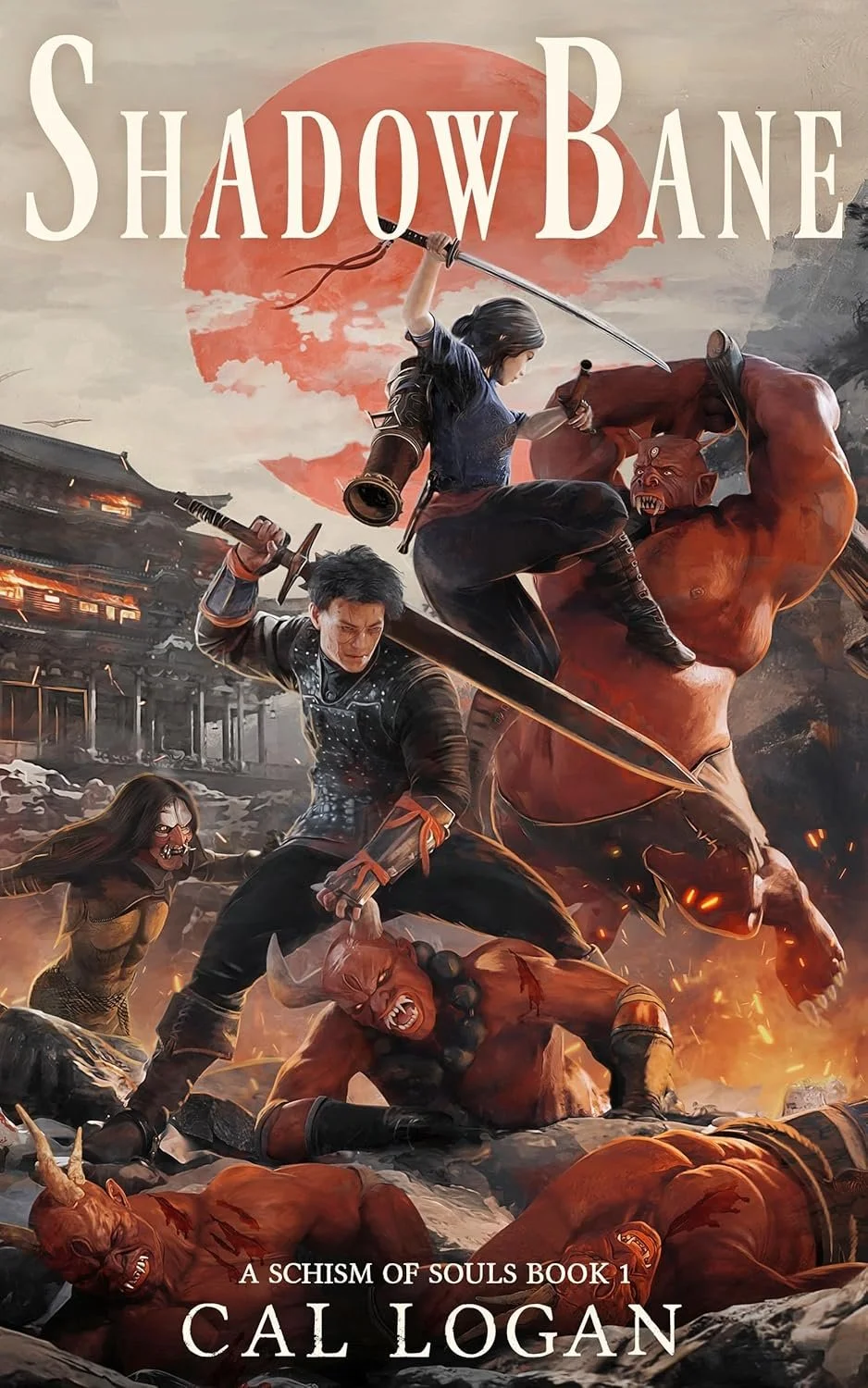
ShadowBane: A Schism of Souls Book 1 by Cal Logan
My longest read of the batch was nonetheless packed with plenty of action and very well written. The tone was extremely dark with visceral depictions of gore and violence, especially of Japanese inspired monsters being theatrically ripped apart during fights.
Underpinning it all, however, character relationships were deep, complex and evolved beautifully if at times tragically through the story. We follow divine twins Shura and Jin, doomed to the fringes of a society that both despises and relies upon their deadly abilities for protection.
Though twins, the siblings have near-polar different personalities and philosophies on life. It’s their interactions between each other and growth through the story which drive our most interesting tensions and drama. A twisted prophecy teeters in the periphery, informing Shura’s choices as she conceals information from her brother while she navigates decent society. Jin just wants to stop fighting and to escape from it all, all propriety be damned. And it seems there’s no line he’s not willing to cross to accomplish that. Maybe in this, they have more in common than we’re led to believe. Additionally, their always-present foreign companion, Wallace, provides not just comic relief, but is also a third-party to help reflect back the alternating view points we’re treated to to decipher how reliable, or unreliable, each narrator can be. His own growth through the story is in turns both touching and revealing as well, showing the horrors of war and trauma on the psyche, and what giving up (or arguably having to compromise on) certain standards can do to your own outlook and well-being.
These nuanced character developments took a while to unfold and grow. It was certainly a slow burn in that respect, but it effectively led to dramatic and heartbreaking attachments to the core cast as we saw them suffer painful and traumatic circumstances time after time. Logan wrote their perspectives with nuance and emotion. I was impressed with even the specific verb choices he made per character point of view to describe different events, it was a great example of showing vs telling, and giving us a deeply thorough look into fully realized personas which made the entire story that much more engrossing, believable and overall more effective.
From the very start, the action was at the fore, giving the reader a vivid depiction of scenes unfolding. Unique weapons and subtly powerful divine powers helped our characters survive waves of demonic onslaught. Mixing in early firearms was a fresh choice to give Shura a believable glass-cannon build. Jin’s foreign Euran broadsword sword offered him a physicality that matched his character’s grit, better than if he had used a regionally native blade like a katana.
In a more surprising development, larger political machinations across the region began to rise to the surface in later sections. They were dynamic and intriguing, but because they were somewhat lacking from the beginning of the story, they did present a bit of a tonal shift from the rest of the book which was to that point more of a focused brutal and bloody romp with good character work.
Among the critiques I had worth mentioning, the start of the novel was also a bit disorienting, as we were thrown right into one of the many maelstroms and its aftermath. It took a moment to find our footing as a result, but from there we quickly gained a steady balance. I know the conventional wisdom is to start late, but there can sometimes be a cost with that and in this case I think we veered just a touch too far. But I fully admit this could be a more subjective point.
The bulky middle section was excellent and hummed beautifully, however if anything it dragged perhaps longer than necessary and for a longer novel like this, and there were scenes here that could have been reduced or cut entirely that wouldn’t have taken away significantly from the story and would have helped with pacing overall—however of all my criticisms, this is my most minor.
The climactic battle was wonderfully executed and featured all the flair I could hope for following all the hard-fought battles that led up to it. But it was the final conclusion which made the largest impact on me. Without trying to spoil anything, I will say it was shocking. It succeeded in making me feel something deeply which the entire novel worked to earn. And with that, I have very mixed feelings about it, especially at the time when I first read it. Despite the shock, it’s tonally consistent with the rest of the book. But I do worry about what it does for the stakes for the subsequent series entries. I’m filled now with an odd mix of hesitancy, curiosity, and dread. Beyond the amazing character work, the depth and intensity of feeling evoked from me at the end is what really set ShadowBane apart, and even weeks later since finishing has made it an extremely memorable experience.
