Blurb:
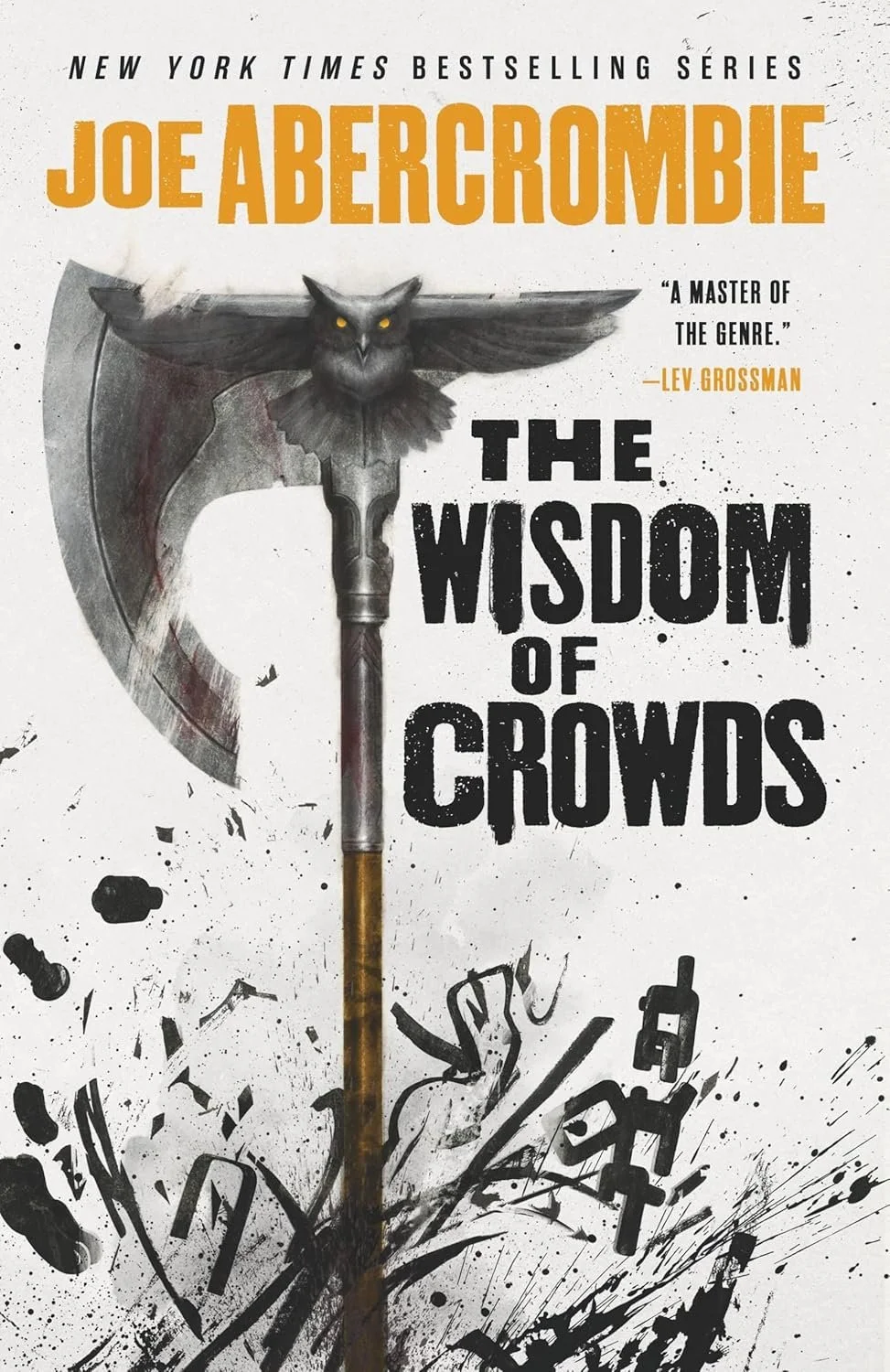
The New York Times bestselling finale to the Age of Madness trilogyfinds the world in an unstoppable revolution where heroes have nothing left to lose as darkness and destruction overtake everything.
Chaos. Fury. Destruction.
The Great Change is upon us . . .
Some say that to change the world you must first burn it down. Now that belief will be tested in the crucible of revolution: the Breakers and Burners have seized the levers of power, the smoke of riots has replaced the smog of industry, and all must submit to the wisdom of crowds.
With nothing left to lose, Citizen Brock is determined to become a new hero for the new age, while Citizeness Savine must turn her talents from profit to survival before she can claw her way to redemption. Orso will find that when the world is turned upside down, no one is lower than a monarch. And in the bloody North, Rikke and her fragile Protectorate are running out of allies . . . while Black Calder gathers his forces and plots his vengeance.
The banks have fallen, the sun of the Union has been torn down, and in the darkness behind the scenes, the threads of the Weaver's ruthless plan are slowly being drawn together . . .
Review:
What a fantastic conclusion to The Age of Madness. But that opinion walks hand in hand with some much-needed emotional recovery. This was easily the most heart-wrenching book of the series.
Let’s get right to it: BIG SPOILERS AHEAD!
It’s ironic that the ones leading this revolution are, in turn, overthrown and executed. Turns out, the “wisdom” of crowds offers nothing but endless bloodshed. I think Glokta sums this up perfectly:
“People love the idea of freedom but, in my experience, there is only so much they can be trusted with. Take it far enough, freedom becomes chaos.”
The Great Change extends to certain characters as well. Leo is almost unrecognizably cold and calculative in the way he allows Judge to try Savine while he “heroically” rides to Adua. And the violent seizing of power after stabbing Forest had my head spinning. It’s wild to think that I once rooted for him. In contrast, Savine only garners more admiration by using her business-oriented cunning for charity. It was a treat to see her flick away the accusations of Sworbeck the prosecutor, and it’s tough to blame her for keeping Broad in his bloody post when Broad keeps himself there just as much.
Bremer dan Gorst went out like the absolute badass he was, and most assuredly earned redemption. And Glokta as the Weaver blew my mind—he orchestrated everything to tear free of Bayaz. Masterful. One of the greatest moments in this series was the clash between Zuri and her brothers against Sulfur. Eater fight!
Finally, we have Black Rikke. I really enjoyed how there was never much context for whether she was having visions with the Long Eye, or what those visions might be. It created suspense and tension throughout her chapters. Even when she had her “falling out” with Isern and the Nail, it smelled fishy, but I couldn’t put the pieces together until it was revealed that Corleth was, indeed, the spy. Although, I did like the small win for Black Calder, revealing to us that Bethod’s line wouldn’t end with him. (It has to be the black-haired boy Clover trains at the end).
Both Rikke and Savine stood out to me with their unexpected mercy toward several characters. It would’ve been easy to condemn them, but I’m of the opinion that they made wise decisions in the end. That includes (reluctantly) when Rikke gave up Orso to Leo. I was clinging to the hope that it wouldn’t happen, but when I read the chapter title—Of Your Heart a Stone—I had a feeling it was over for him. My heart hurts for the tragedy of such a likeable character.
I’m hoping that Rikke’s ominous vision at the end will lead to further stories within the First Law universe. The boy I’m assuming is from Bethod’s line, along with Hildi, are set up nicely to fuel the never-ending plans of the great Bayaz.
Also, someone tell the Nail that those barrels of ale from Ollensand might be poisoned…