Kiana by Zammar Ahmer
Blurb:
War is only part of her story.
When I was young, I fell asleep to the song of artillery.
We were told we would win.
But the enemy never got the message.
They came from across the mist with the devil’s magic, stole our land, and enslaved our families.
And then you decided to send me, of all people, into the fire? To bring back the secrets that would save our nation?
Are you bloody mad?
What happened, you ask? Oh, I'll tell you.
But let me start at the beginning.
Robin Hobb meets Fonda Lee in this intimate WWI-era fantasy saga of family, love, duty, and betrayal.
Review:
At 802 pages, Kiana was a doorstopper of a book that, I’ll admit, I was hesitant to dive into. The setting takes inspiration from WW1 while incorporating magic into a genre-bending and deeply intimate character study that inevitably pulls you in and keeps you hooked. Despite already being partial to a few of those elements, I was pleasantly surprised by just how invested I became. It takes an incredibly skilled author to do what Ahmer has done, drawing me into Kiana’s life and emotions like the ever-increasing pull of a magnet until, before I knew it, every page had flown by. In moments, I was so consumed that I felt veritably trapped in the swirling abyss of desperation and emotion that plagued Kiana.
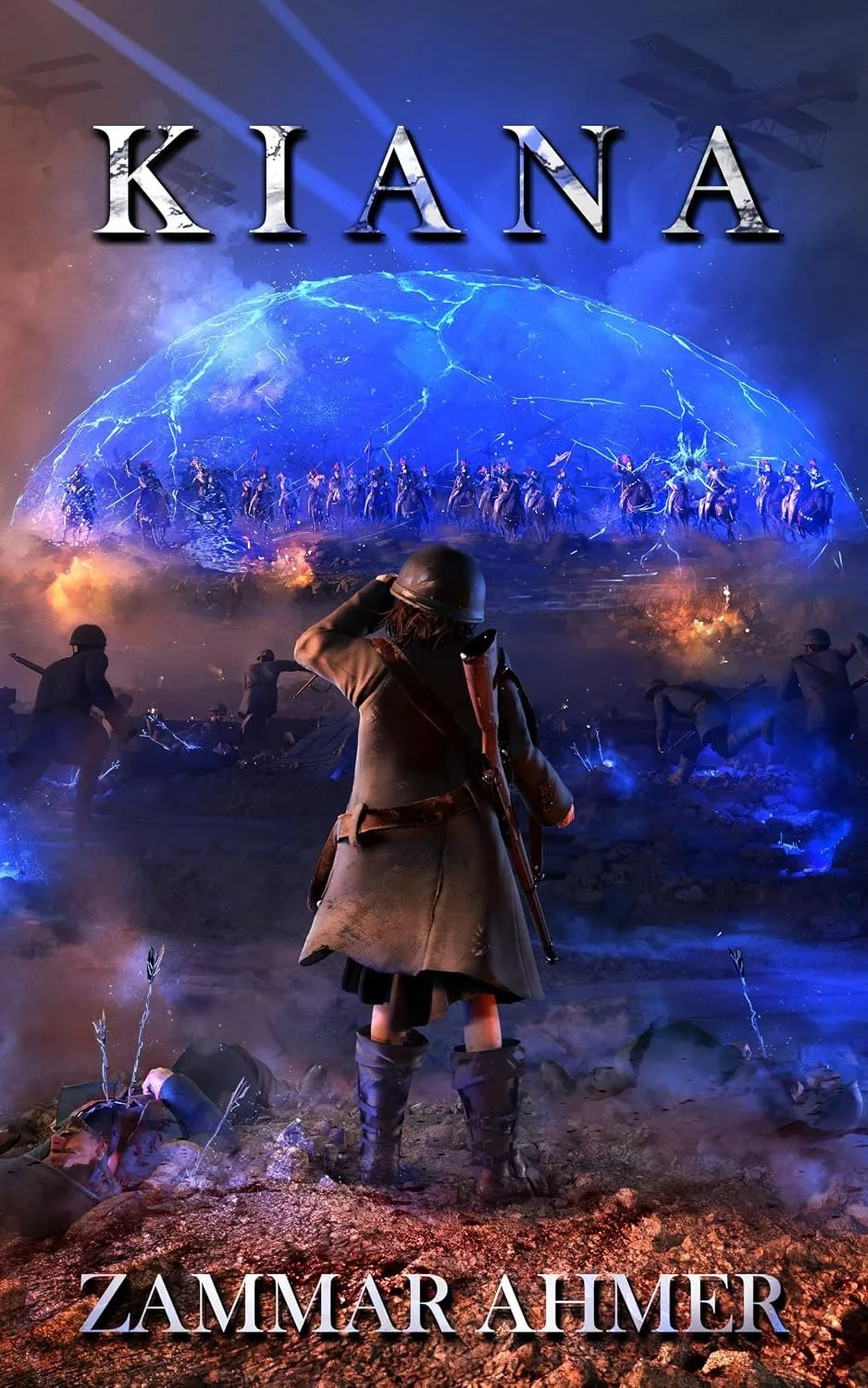
As a big fan of character-driven stories, this book led me through a coming-of-age journey like no other. Ahmer utilizes a variety of narrative techniques in Kiana, including framed and unreliable narration. This turned out to be a wise choice, as the pacing never dragged or sprinted. While some stories might fall into the dreaded pit of tedium with such a high page count, Kiana consistently felt fresh and intriguing.
The story tackles themes of betrayal and despair, of deep love and loss, and of what it takes to rise above trauma and find happiness and success. In a world consumed by war, there is plenty that one can imagine would contribute to such experiences. It also shines a light on the social and cultural effects of slavery, and includes a gentle and virtuous character by the name of Nima, whose example we can all aspire to follow.
In short, this book ignites a whirlwind of emotion, from overwhelming sorrow to fist-pumping exultation. It turned out to be far from what I expected in the best way possible and is undoubtedly the biggest surprise of the year for me thus far. Those who choose to make time for this epic and intimate story will most likely find the same appreciation I did, since certain characters and events are deeply relatable, whether for good reasons or not. I highly recommend Kiana for those looking to immerse themselves in an intimate, character-driven work with the backdrop of an epic and tragic conflict. Ahmer’s writing has reached new heights, and I’m highly anticipating any works to come in the future.
For fans of historically inspired fantasy that is character-driven and emotionally impactful, Kiana will not disappoint. Thank you to the author and BookSirens for the eARC.