The Ships of Merior by Janny Wurts
Blurb:
A powerful, layered weaving of myth, prose and pure imagination – The Ships of Merior continues an epic fantasy series perfect for enthusiasts of The Dark Tower and Earthsea.
The second volume of Janny Wurts's incomparable series following Arithon and Lysaer, two brothers forced to take opposite sides in a relentless conflict.
After defeating the malevolent fog that blighted Athera, Arithon and Lysaer battle the throes of the Mistwraith's insidious retribution: a curse set upon them at their moment of triumph compels them each to seek the other's downfall.
Lysaer, the charming and charismatic Lord of Light, drives his brother out of hiding and hounds Arithon with a massive army at his command. Meanwhile Arithon, Master of Shadow, the sensitive mage who prefers music to violence, must take to the seas to evade capture and strike back against Lysaer's mighty war host.
Locked into lifelong enmity, the brothers’ pursuit of each other's destruction will test the foundations of human morailty, even as threat to the world’s deepest magic rides on the outcome.
THE SHIPS OF MERIOR weaves a rich and complicated tapestry, bringing readers deeper into the mystical world of Athera. Striking a balance between epic scope and intricate subtlety, the Wars of Light and Shadow is a must-read series for readers of intelligent fantasy.
Review:
When Half a Volume Outshines Lesser Epics
Certain readers belong to that solitary contingent that treasures the initial movement of a sequence above all subsequent turns of the wheel. While the majority eagerly await a second volume to harvest the fruits of worldbuilding, my own taste remains tethered to the quiet majesty of early exposition, atmospheric depth, and original character design. The Ships of Merior, the second entry within Janny Wurts’s monumental saga The Wars of Light and Shadow, presents a formidable challenge to that personal rule.
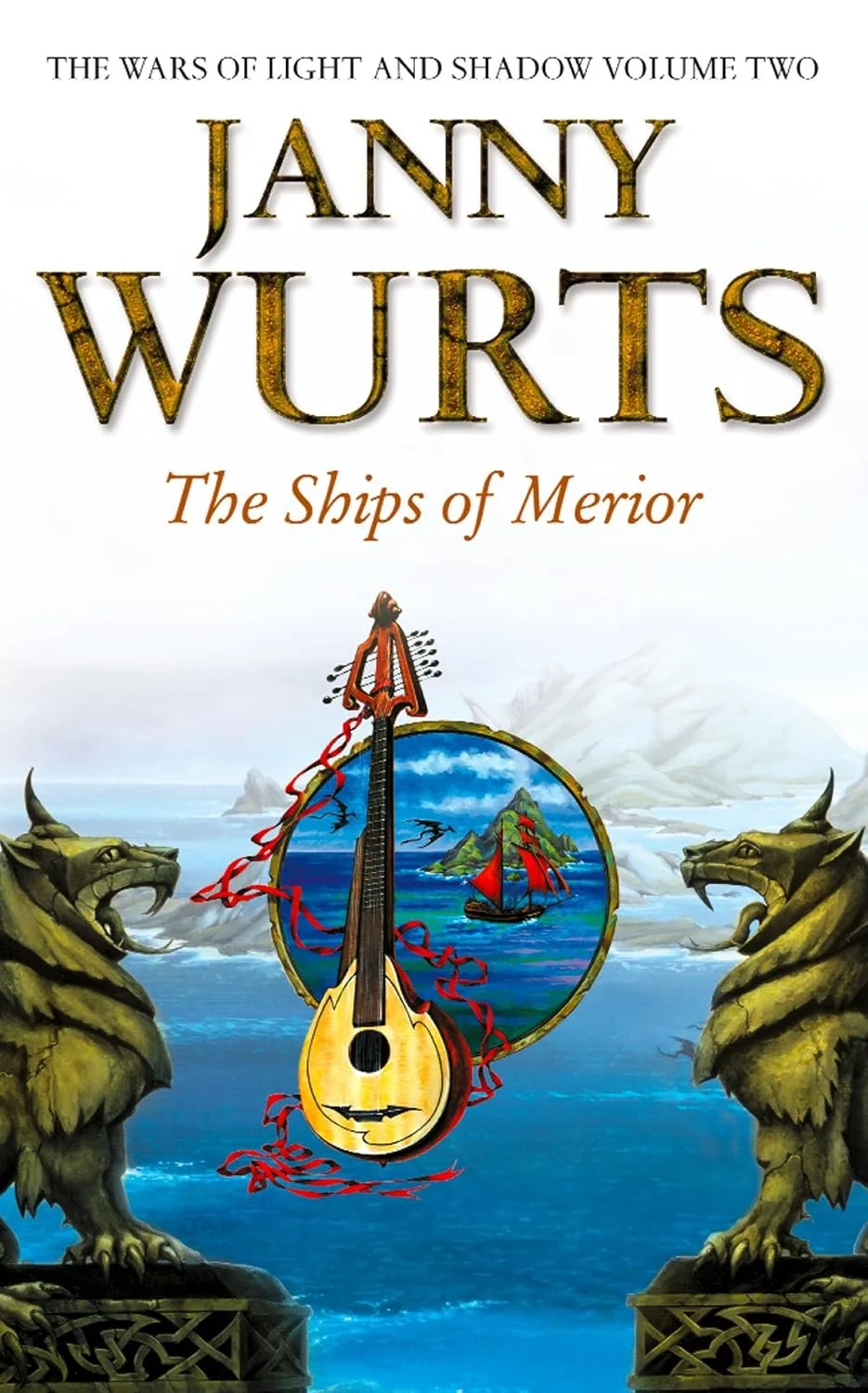
My encounter with the text occurred via the British paperback edition, a volume divided by publisher constraints into a two-part release. Though I consumed what is essentially the opening act of a single, sprawling tome, Wurts achieves a narrative of dense, majestic, and emotionally devastating proportions. Her work stands as an unyielding monument to literary craft, exposing the lightweight nature of contemporary epic fantasy.
The Burden of the Split Volume
To measure the full weight of The Ships of Merior, one must first reckon with its convoluted publication history. The original American release presented this arc as a singular, sweeping narrative. The British publisher, constrained by physical page limits, split the text into two distinct parts: The Ships of Merior and Warhost of Vastmark. A reader who approaches the UK edition encounters a structure that feels inherently fractured.
The initial third of the text sidelines the primary protagonists to linger upon secondary actors. Furthermore, because this volume represents only half of a single arc, the climactic confrontation mirrors the emotional cadence of The Curse of the Mistwraith. Readers might register a subtle impression of repetition, yet this pace arises from artificial editorial division rather than any flaw in composition. The overarching story requires its second movement to achieve true catharsis, yet even in this truncated state, the sheer momentum of Wurts's craft carries the weight of a triumph.
A Trial of Human Stagnation
A substantial portion of the opening movement belongs to Elaira and the Mad Prophet, Dakar. Extended proximity to Dakar tests the reader's endurance. He stands as an abrasive, erratic, and obstinate figure who appears wholly incapable of learning from his past errors. While he offers necessary levity following the tragic climax of the first book, his static flaws make him difficult to endure over long passages.
Wurts employs Dakar to examine the tragic, cyclical nature of human dysfunction. Certain individuals repeat the same destructive patterns continuously, blind to every opportunity for inner growth. Though his presence remains vital to the wider tapestry, his static nature in this specific volume taxes a reader's patience. Fortunately, as the focus shifts back to the central struggle, the grand narrative swiftly regains its stride.
Duty, Nature, and Curse
The true majesty of the work returns when the narrative spotlight falls back upon the half-brothers, Lysaer and Arithon. Bound into a generational feud by the lingering curse of the Mistwraith, both men struggle against the terrifying chasm between their private longings and their forced destinies. Wurts elevates their tragedy through profound meditations on empathy, sovereignty, moral duty, and the sacred resonance of music and art.
The surrounding cast undergoes equally compelling developments. Luhaine, the Sorcerer of the Fellowship of Seven, steps into the foreground with brilliant tactical maneuvers that redefine his role in the saga. Tantalizing revelations regarding the cosmic origins of the Mistwraith expand the scope of the universe without relying on flat exposition.
Martial Mastery and the Bitterness of Hollow Victory
When the narrative moves toward open conflict, Wurts delivers military sequences of extraordinary richness and tactical weight. The sheer precision of detail during naval engagements and land maneuvers sets her combat scenes apart from any contemporary peer. Every shift in formation carries consequence, every grand strategy costs blood, and every victory leaves a bitter residue upon the tongue.
The climax of this volume offers no simple, triumphant resolution. A victor emerges from the central battle, yet the outcome leaves an ache in the chest. Wurts refuses to grant her characters easy glory. Instead, she delivers a heart-wrenching confrontation where triumph feels indistinguishable from defeat, leaving the reader breathless and emotionally bruised.
The Splendor of Uncompromising Prose
Wurts writes with an elevated, high-literary register that demands absolute focus. Her syntax is intricate, her vocabulary vast, and her prose structured with architectural precision. At times, simple transactional beats receive such ornate phrasing that a reader might question whether the moment requires such grandeur. Yet, Wurts owns her style without compromise. She refuses to simplify her language for effortless consumption, creating an atmospheric richness that has no equal in modern epic fantasy.
A Masterwork in Progress
The Ships of Merior may present a challenging read, but it rewards perseverance at every turn. Though packaged awkwardly in its split paperback form, it showcases an author at the absolute zenith of her literary powers.
The Ships of Merior delivers a magnificent, demanding, and deeply rewarding experience. If you have not yet braved The Wars of Light and Shadow, prepare yourself for a journey of unmatched depth.
Wurts has crafted her magnum opus with sheer artistic brilliance, an epic fantasy experience that sets a gold standard for the genre. Do yourself a favor: submit to the beauty of her prose, and discover one of the most remarkable achievements in modern literature.